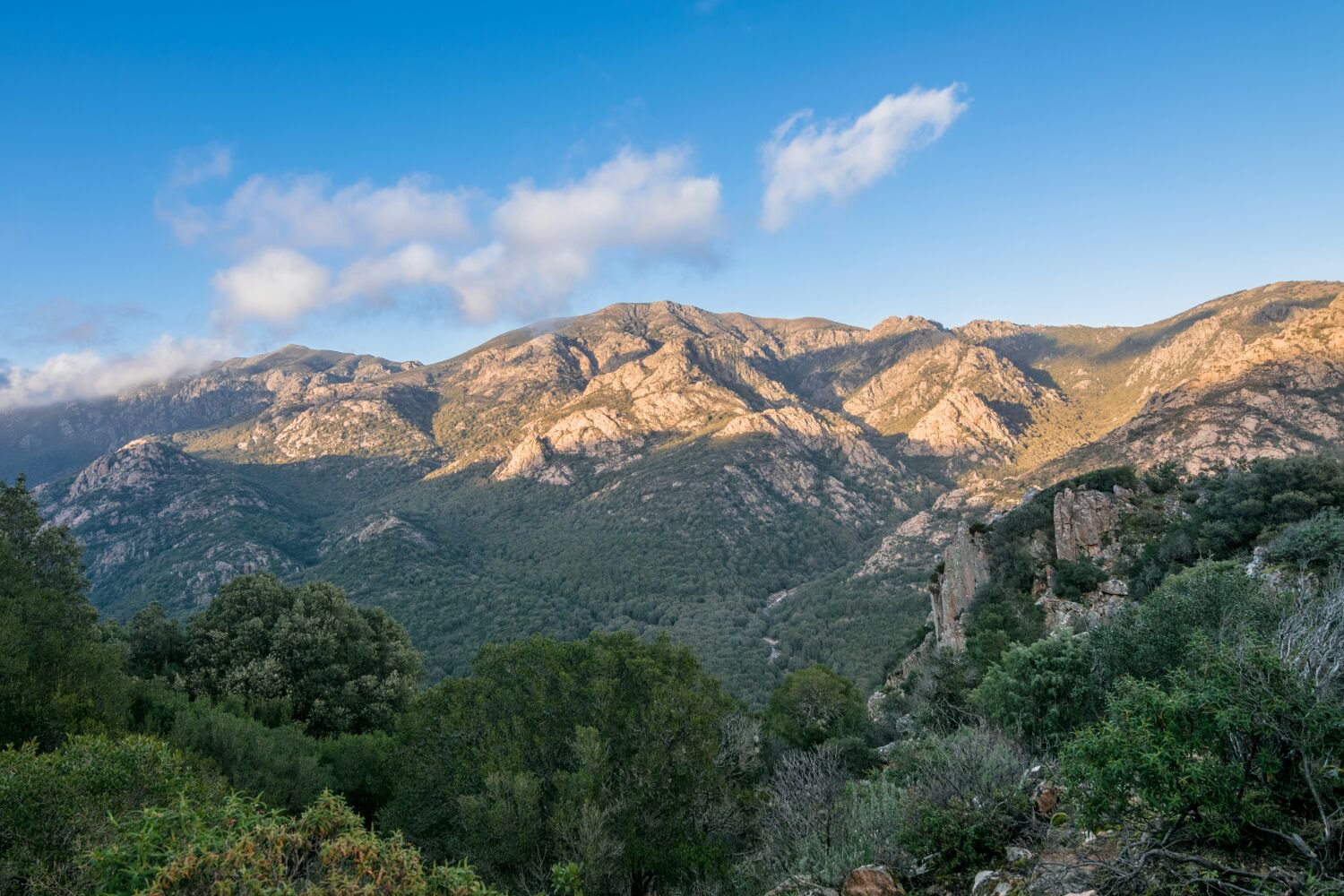
1. Orographic Precipitation & the Linas Catchment
The hydrological engine powering Cascate di Sa Spendula is the massive granite mountain massif of Monte Linas. Rising to 1,236 meters at Punta Perda de sa Mesa directly above the low-lying Campidano plain, the Linas acts as an orographic barrier. When moist Atlantic low-pressure systems push across the Mediterranean from the west and north-west during autumn and winter, they are forced upwards along the mountain slopes, cooling rapidly and producing substantial precipitation.
While the coastal plains around Cagliari receive barely 450 millimeters of rain annually, the high watershed of Monte Linas receives between 850 and 1,100 millimeters. Because the Hercynian granite bedrock is virtually non-porous, rainwater cannot infiltrate deep subterranean aquifers; instead, it funnels directly into steep mountain tributaries that converge into the Rio Coxinas.
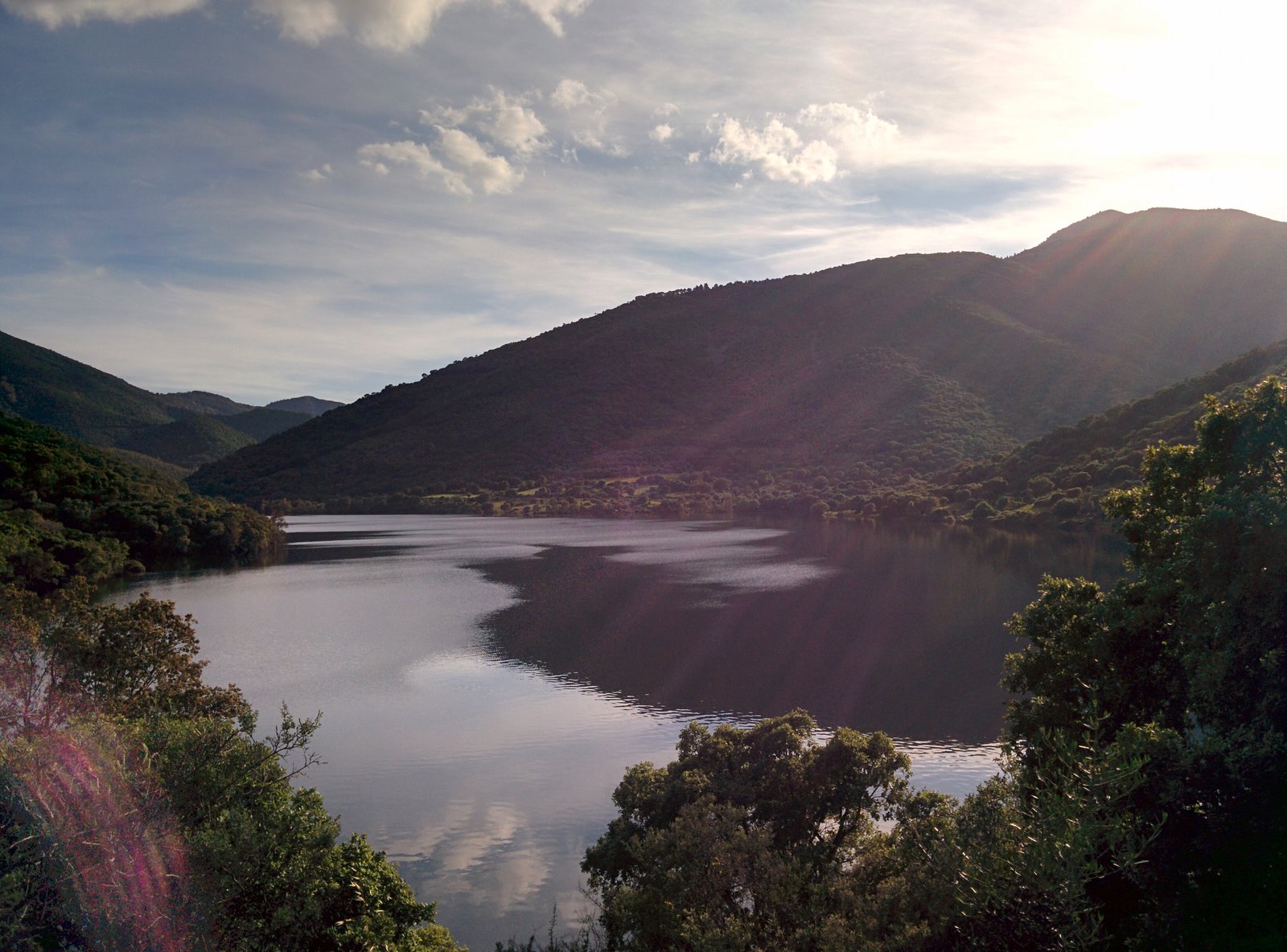
2. Month-by-Month Field Assessment
Planning your visit around the natural hydrological rhythm ensures an exceptional experience:
- November – February (Winter Cataracts): Maximum water discharge. Heavy roaring torrents, dramatic white water spray, and roaring echoes in the gorge. Temperatures hover around 11°C to 15°C. Warm waterproof jacket and sturdy hiking boots required.
- March – May (Spring Bloom Peak): The most balanced season. Strong steady water flow coupled with mild daytime temperatures (18°C–23°C), blooming wild cyclamens, and oleanders leafing out along the stream banks. Optimal conditions for photography and family walks.
- June (The Early Summer Transition): Water discharge begins to taper. Pleasant shaded retreat in the pine forest, excellent for combining with the village Cherry Festival.
- July – August (The Dry Gorge): High summer drought reduces the stream to a quiet trickle or dry stone channel. Do not visit expecting roaring falls; instead, enjoy the cool pine park shade and mountain trailheads.
- September – October (The Autumn Renewal): The first autumnal Atlantic thunderstorms replenish the high mountain pools, awakening the waterfall with sudden new vitality.
3. Mountain Wind Patterns & Thermal Microclimates
Villacidro enjoys a unique shelter from southern summer heatwaves. Positioned on the eastern and north-eastern foothills of the Linas range, the town and the waterfall canyon receive cool katabatic breezes descending from the mountain peaks as soon as the sun dips behind the granite ridges in late afternoon.
While ambient lowland temperatures on the Campidano plain can reach 38°C in July, the shaded pine park of Sa Spendula consistently measures 4°C to 6°C cooler, with cold air drainage circulating down the Rio Coxinas cleft. Conversely, during winter northerly gales (Tramontana), the canyon serves as a wind funnel, requiring windproof alpine outerwear.
Hydrological Advisory for Photographers: Long-exposure landscape photographers aiming to capture silky white water motion should bring neutral density (ND8 or ND64) and circular polarizing filters. The deep granite gorge is heavily shaded until late morning, allowing long shutter speeds (1 to 3 seconds) without overexposing highlights. The best ambient light occurs between 09:30 and 11:30 when indirect sunlight illuminates the upper cascades.